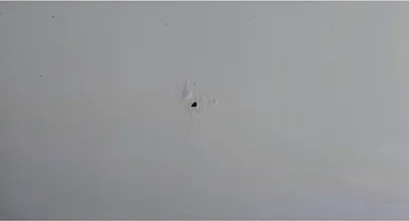
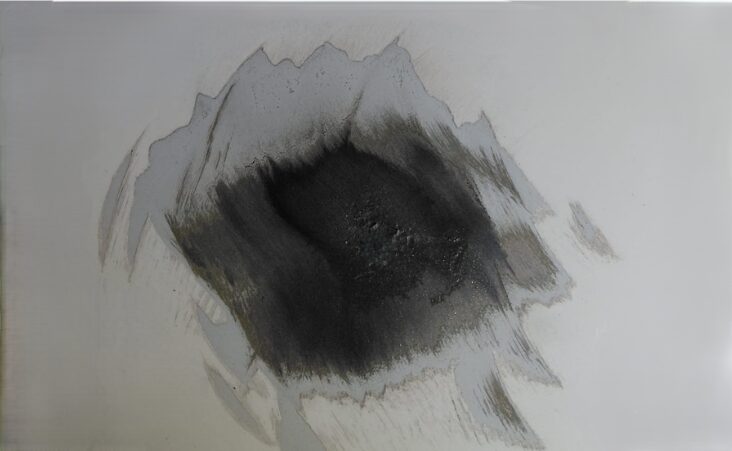
Why can rust return even after a car is repainted?
Many drivers mistakenly believe that repainting a car completely stops rust. Unfortunately, this is not the case — paint covers the damage externally, but does not stop the oxidation process if it has already started beneath the surface. This means the car may look nice, but rust continues to spread in hidden areas.
Rust is one of the most serious and dangerous types of car damage, and if you do not stop it in time, repairs can become very complicated and expensive.
Reasons why rust returns after painting
1. Rust residue under the paint
If the entire layer of rust is not completely removed before painting, oxidation continues “from the inside.” Over time, rust pushes through the new paint, forming bubbles and cracks.
2. Rust that starts inside the structure
Sills, arches, longitudinal beams, and cavities often rust from the inside. Even if the exterior is perfectly painted, rust can continue to grow in hidden places and return very quickly.
3. Moisture entering microscopic cracks
Moisture gets into even the smallest cracks, which are not visible to the naked eye. In these places, oxidation continues even after professional painting.
Microcracks can form in various everyday situations, for example:
-
when driving behind a gravel or construction material truck, from which small stones and sand are thrown up and hit the bodywork;
-
when driving on roads treated with crushed stone or sand mixture (especially in winter and spring), when wheels lift small particles into the air and they hit the bodywork;
-
when driving on dirt roads, where tires throw stones and sand into the air — especially in situations where another car is driving ahead and its tires throw particles back.
In such moments, particles hit the paint layer with great speed and force, creating microscopic cracks or small paint damages, which over time allow moisture to penetrate and promote rust formation.
4. Improper preparation or cheap materials
If the surface is not properly cleaned, primed, and treated with professional anti-corrosion materials, the paint is applied only for visual effect, not for long-term protection.
There is also a common misconception that a thicker layer of filler will delay rust from coming to the surface. Theoretically, this may seem logical, but in reality, by the time rust breaks through the filler layer, the metal underneath will already be significantly corroded. This means that visually the damage is temporarily hidden, but the problem is not actually solved.
Why does rust removal before painting require more work?
To completely stop the spread of rust, it is usually necessary to perform several time-consuming and technically complex steps:
-
clean the surface to bare metal,
-
cut out deeply damaged or rusted-through areas,
-
perform welding work if necessary,
-
treat the metal with anti-rust protective materials,
-
apply filler and a moisture-resistant protective layer,
-
prime the surface,
-
and only then paint.
This process requires a lot of work because not only the visible rust must be removed, but also hidden damage. That is why complete rust removal often costs more and requires more time, materials, and specialist resources.
Why does ignoring rust always cost more?
Rust leaves no room for compromise — it spreads quickly and aggressively, especially in Latvia's climate.
If you do not stop rust in time:
-
larger areas have to be repaired,
-
sometimes a part of the metal has to be cut out,
-
wider areas have to be prepared and painted,
-
the risk of damaging the structure increases.
A small rust spot today can turn into an expensive repair problem in just a few months.
Important: why is it impossible to give a 100% guarantee that rust will not return?
Even the highest quality rust treatment cannot provide a complete guarantee. This does not depend on service quality, but on objective factors:
-
rust may have developed much deeper than initially visible;
-
microscopic damage may remain inside the structure;
-
moisture will eventually get into hidden zones again;
-
the car's age and previous damage increase the risk;
-
Latvia's climatic conditions (salt, moisture, temperature fluctuations) accelerate corrosion.
A good service can guarantee professional work and correct technology, but it is impossible to promise anyone complete corrosion stoppage for life.
What to do if a small rust spot appears?
1. Do not paint over it yourself
Painting over rust only makes the situation worse — oxidation continues hidden underneath.
2. Go to a service as soon as possible
A specialist will assess whether the damage is superficial or has already spread deeper.
3. Professional local treatment is performed at the service:
-
removal of rust to bare metal,
-
anti-corrosion treatment,
-
surface preparation,
-
painting in a tone that matches the car's color.
4. After repair — check regularly
In the long term, this helps to notice new damage in time.
When does rust require removing the windshield or window glass?
Rust often forms under the rubber or near the windshield, where the paint cracks and lifts. In these areas, moisture accumulates very quickly.
To completely eliminate the damage:
-
the windshield or side glass is removed,
-
the metal is cleaned and restored,
-
the area is repainted,
-
the glass is hermetically reinstalled.
Without removing the glass, it is impossible to fully treat the rust, and the damage returns very quickly.